

For decades, fundamentalist discernment ministries have scrutinised Dr Billy Graham’s public ministry. Critics frequently highlighted his 1997 interview statements regarding inclusivism, his broad fellowship with Roman Catholicism and liberal Protestantism, and his soft-spoken responses to media figures.
As leadership of the Billy Graham Evangelistic Association (BGEA) and Samaritan’s Purse transitioned, important questions emerged regarding whether a distinct theological path would be charted or if the controversial institutional trajectory would continue.
An evaluation of primary documentation, crusade referral records, and organisational practices reveals that while a more conservative cultural tone is presented, the ministry operates within the same ecumenical framework originally established.
1. The Ecumenical Legacy: Institutional Cooperation and Referral Systems
The fundamentalist critique of Billy Graham’s methodology centred on the practice of requiring all participating local churches including liberal mainline Protestant and Roman Catholic congregations to be invited to join crusade committees. Under this policy, decision cards filled out by inquirers were distributed back to their home or neighbourhood churches, even if those churches taught baptismal regeneration or sacramental salvation.
Continuation of the Model
Discernment analysis indicates that this methodology has been explicitly embraced and defended throughout subsequent leadership:
- Direct Inheritance: Public remarks have acknowledged the historical precedent set by early Catholic support for crusades, noting how it established a pattern for broader inter-church cooperation.
- Ecumenical Crusade Steering Committees: During festival events and tours, local planning committees regularly feature broad inter-denominational representation, utilising the same multi-church support system that characterised earlier campaigns.
- Inquirer Referrals: Decision-card counselling procedures continue to direct professing converts back to participating local bodies, preserving the core practice that fundamentalist critics argue confuses the line between biblical repentance and sacramental ritualism.
2. Exclusivism vs. Institutional Loyalty
A primary focal point of historical criticism involved statements suggesting that individuals who may not know the explicit name of Jesus might nevertheless respond to available light and be included in the Body of Christ.
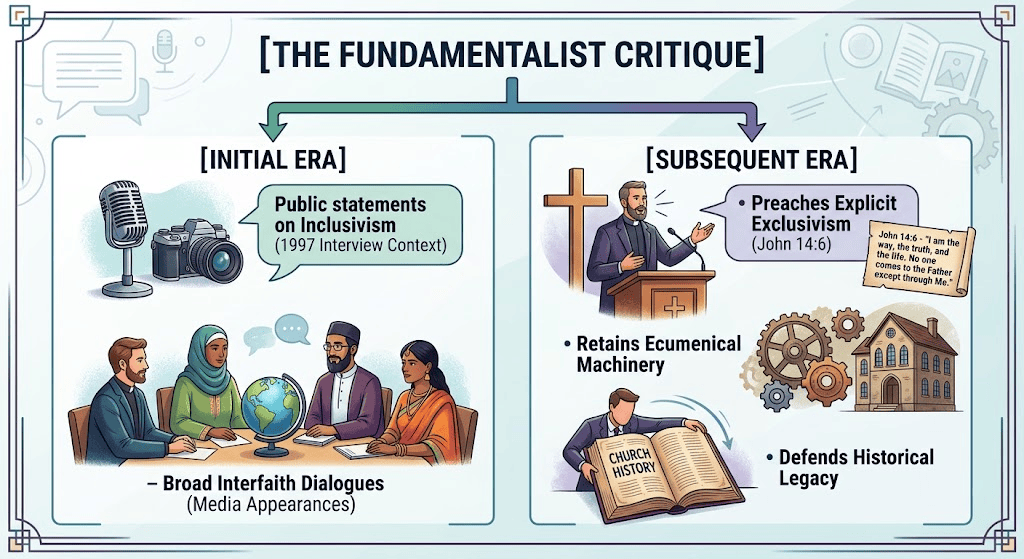
The Theological Tension
Public stances often differ noticeably from past controversial remarks:
- Explicit Preaching: Public teaching consistently emphasises that explicit, conscious faith in Jesus Christ is the sole means of salvation, frequently citing foundational texts such as John 14:6.
- The Discernment Challenge: Despite preaching an exclusive gospel message, critics argue that institutional compromise is maintained. By honouring and defending the overall historical legacy without publicly correcting or repudiating past inclusivist interview statements, critics contend those doctrines are tacitly shielded from biblical accountability.
In discernment literature, benefiting from an ecumenical organisation’s reach while maintaining silence on historic theological compromises is treated as a form of secondary fellowship.
3. Global Relief and the Principle of Biblical Separation
Beyond evangelistic associations, international relief operations—such as Samaritan’s Purse—manage massive global humanitarian efforts.
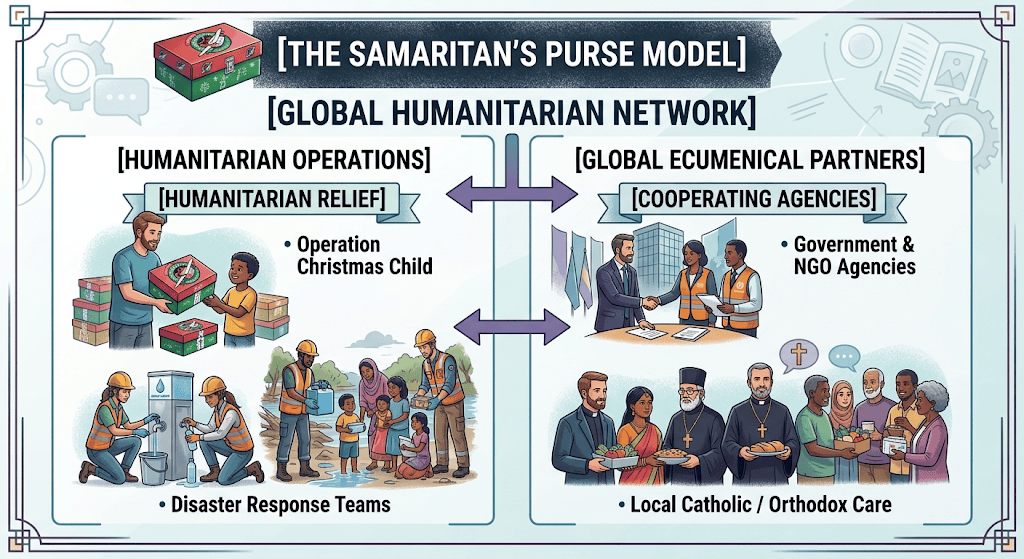
Publications that advocate for strict biblical separation apply the same critique to relief work as they do to crusade evangelism:
- Uniting for Humanitarian Aid: Operation Christmas Child and international relief projects regularly partner with government agencies, ecumenical councils, and Roman Catholic or Orthodox organisations to deliver supplies and host events.
- Separation of Works and Doctrine: Critics argue that uniting with unbiblical religious bodies for social or humanitarian endeavours undermines the mandate to contend earnestly for the faith once delivered.
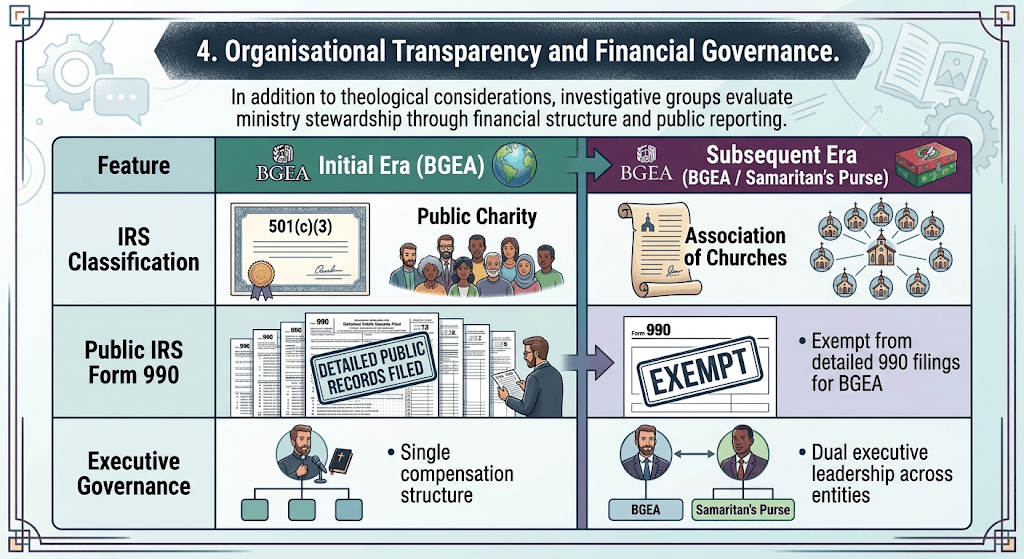
Tax status reclassifications categorise organisations as “associations of churches.” While legally permissible, critics note that this designation exempts the organisation from filing public IRS Form 990 returns, thereby reducing external transparency regarding detailed operational expenses, vendor contracts, and executive compensation compared to standard public charity standards.
Conclusion
When evaluated through the lens of fundamentalist discernment literature, ministry operations reflect a continuation of an established institutional framework. Although a more politically vocal and culturally exclusive message is presented, reliance remains upon the same foundation: broad multi-denominational alliances, ecumenical convert referral systems, and global inter-religious partnerships.
For critics who hold to strict biblical separation, the fundamental issue remains unchanged: the choice to prioritise global institutional reach over ecclesiastical separation.
Views: 0
Discover more from UK Apologetics Library
Subscribe to get the latest posts sent to your email.
You must be logged in to post a comment.