

Labyrinths: Prayer Paths and the Question of Occult Spirituality
http://www.truia.net/Labyrinths.html
What is a Labyrinth?
A maze, a prison, a sacred precinct, a place of peace… the labyrinth is an enigma and a riddle, one that has puzzled historians for centuries. Where did it come from, how was it used? Why
is it making a comeback?
Excerpt from the Book “Labyrinths”
For decades in the 20th Century, an ancient mystery has been reappearing in our midst. The strange and sinuously beautiful labyrinthborn some time in the Bronze Age and still going stronghas been emerging once again across the landscape of the industrialised world, reasserting itself as one of the preeminent symbols and playthings of the human imagination. Across Europe and the Americas, Australia and New Zealand, it has been appearing, in new and creative forms, in public squares, parks and churches, prisons, hospitals, retreat centres and wilderness areas, in private gardens, schools and even alongside freeways…….
The labyrinth’s re-emergence poses many interesting questions about who we are and where we are going. History shows that it crops up in times of change and breakdown in traditional social and religious structures. Over and over again, it appears as a device for protection and guidance in times of difficulty and struggle. Today, in awakening us to our deeper humanity, our “hearts”, it has the possibilityso some people think anywayof becoming a tool for peace which can encourage tolerance and understanding, important functions in a crowded, busy world. (Ibid – Labyrinths)
https://labyrinthsociety.org/about-tls/
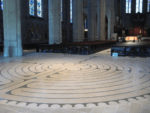
International Labyrinth Society: A labyrinth is a single path, or unicursal tool, for personal, psychological, and spiritual transformation. Labyrinths are thought to enhance right-brain activity.
The labyrinth was a central feature in many of Europes Roman Catholic churches in the middle ages and many of these still exist today.
The labyrinth is often presented as an ancient Christian symbol, a peaceful walking path, or simply a tool for prayer and spiritual reflection. However, the subject is considerably more complicated. Labyrinths have a long and varied history, while contemporary labyrinth literature describes their use in contexts involving spiritual transformation, meditation, energy, divination, Neo-paganism and other forms of alternative spirituality. They have also been incorporated into churches and Christian prayer programmes.
This section examines the history and symbolism of the labyrinth, how it is understood and used within contemporary spirituality, and how the practice has subsequently been introduced into Christian settings, including material associated with Hope. The question is not whether every person who walks a labyrinth consciously practises the occult, nor is it the claim that every labyrinth has exactly the same historical meaning. The issue is more fundamental:
What spiritual function is being given to the labyrinth, where did those ideas come from, and does Scripture authorise Christians to use it as a prayer path?
The evidence therefore needs to be examined carefully rather than dismissed simply because the labyrinth appears within a Christian setting or is accompanied by Christian language. Scripture commands:
“Beloved, believe not every spirit, but try the spirits whether they are of God.”
– 1 John 4:1 (KJV)
The following examination will therefore consider the history, symbolism and contemporary spiritual uses of the labyrinth before examining its adoption within Christian practice and the promotion of labyrinth prayer within Hope material.


Views: 2
Discover more from UK Apologetics Library
Subscribe to get the latest posts sent to your email.
You must be logged in to post a comment.